
Rome’s origins: she-wolf or prostitute?
Was the animal that saved Rome’s founders really a woman? The question is ancient, not an internet debunking. Latin lupa could mean a she-wolf or, figuratively, a prostitute. Livy and Plutarch both record a version in which that ambiguity helps explain the twins’ extraordinary nurse. Neither author gives us grounds to announce that the mystery has been solved.[1][2][3]
One word, two possibilities
Lewis and Short’s Latin dictionary separates the literal animal from the transferred meaning applied to a woman. Its examples include comedy, political invective, and the foundation narrative itself. The figurative use is therefore independently attested; it was not invented by someone trying to make the Romulus story sound plausible. But a dictionary establishes possible meanings, not which meaning belongs in every sentence.[1]
That last distinction matters. Translating every lupa as “prostitute” would be as misleading as insisting it always means an animal. Where a writer describes paws, milk, or a wild creature, the narrative may plainly intend a wolf. Where the writer explicitly discusses a woman’s reputation, the sexual meaning becomes relevant. The ambiguity is something to interpret in context, not a code that automatically overturns the story.[1][2]
What Livy and Plutarch actually say
In Book 1.4, Livy first tells the familiar rescue: a wolf nurses the abandoned infants; the herdsman Faustulus discovers them and brings them to his wife Larentia. He then offers an alternative. Some people, he says, thought the shepherds called Larentia lupa because she was a prostitute, allowing the marvelous animal story to arise. He preserves competing explanations instead of declaring one established fact.[2]
Plutarch’s Life of Romulus, chapter 4, likewise records the claim that a nurse’s ambiguous name turned the account into a fable. He identifies her as Acca Larentia, Faustulus’s wife. His surrounding narrative also makes room for the wolf and woodpecker as creatures associated with Mars. The human nurse and the sacred-animal story belong to different ways of explaining the founders’ survival.[3]
The woman in this alternative is the twins’ foster mother, not their birth mother. Confusing Larentia with Rhea Silvia changes the ancient claim into a different story. Nor do two surviving accounts amount to two independent witnesses to a rescue: these are literary traditions about Rome’s beginnings, not testimony from the scene.[2][3]
| Evidence | What it supports | What it cannot establish |
|---|---|---|
| The Latin word | Both wolf and prostitute are attested senses. | That every occurrence means a prostitute. |
| Livy 1.4 | An ancient explanation connects Larentia’s reputation with the wolf story. | A verified biography of the twins’ nurse. |
| Plutarch, Romulus 4 | The ambiguity was explicitly discussed in antiquity. | Independent eyewitness confirmation. |
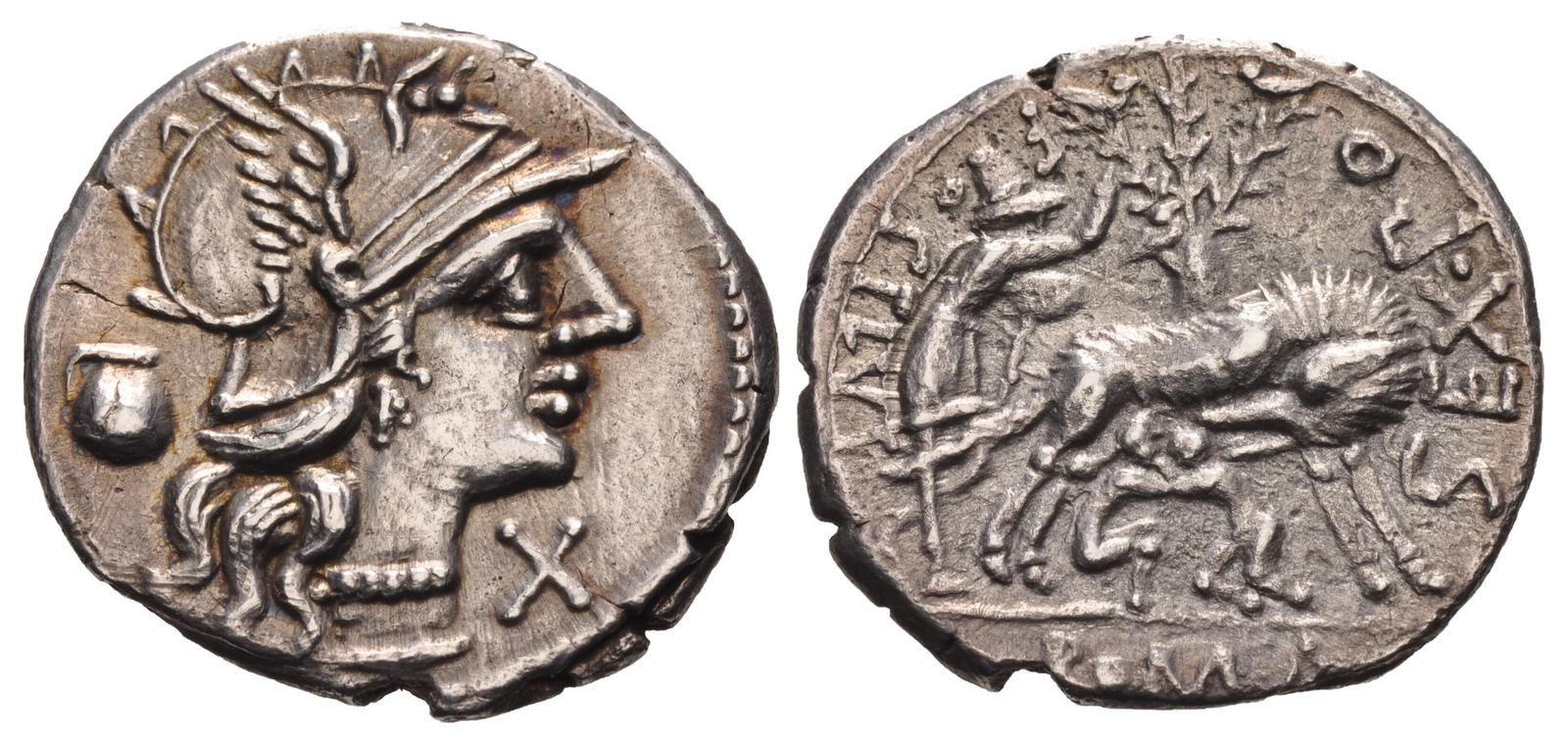
| The 137 BCE denarius | The wolf-and-twins image circulated on Roman money. | That a wolf actually nursed the founders. |
A foundation myth can hold an uncomfortable tension
Cristina Mazzoni’s study of the she-wolf treats linguistic ambiguity as part of the symbol’s history. Her introduction places the wolf story beside the traditions that connected Rome with Troy, showing how Rome’s beginnings were assembled from narratives that could be combined and reinterpreted. A single, uncontested original version is the wrong starting assumption.[4]
One way to read the two nurses is as a tension between public prestige and socially devalued care. A miraculous beast makes the founders exceptional; a woman described through a sexual insult makes their survival depend on someone the label diminishes. This is an interpretation of the stories, not proof of Larentia’s occupation. It asks whose work a community honors, whose reputation it damages, and whether those can be the same person.[1][3][4]

The wolf on the money
The featured silver denarius offers a particularly apt meeting of culture and economics. Its reverse presents the wolf nursing the twins, with Faustulus and a fig tree nearby. Minted in 137 BCE, it is material evidence that this version of the story was being displayed on Roman currency. The coin authenticates the image’s use, not the events depicted.[5]
We can therefore answer the title carefully: a prostitute is an interpretation already present in ancient literature, while the she-wolf is an unmistakable ancient image. The stronger historical conclusion concerns the coexistence of those meanings. Rome could imagine its beginnings through both miraculous protection and a woman’s contested reputation; choosing one as a proven eyewitness account asks more of the evidence than it can give.[2][3][4]
Sources & citations
- Lewis and Short, A Latin Dictionary: “lupa” — Lexical evidence for the literal and figurative meanings; available through Perseus / Scaife ATLAS.
- Livy, History of Rome, Book 1.4 — Primary literary source. The wolf rescue and Larentia alternative appear together in Book I. Ancient tradition, not eyewitness evidence.
- Plutarch, Life of Romulus, chapters 3–5 — Primary literary source; Bernadotte Perrin translation, Loeb Classical Library, 1914. Chapter 4 explicitly discusses the ambiguity.
- Cristina Mazzoni, She-Wolf: The Story of a Roman Icon, introduction — Cambridge University Press. The accessible introduction discusses lupa and the combination of Roman foundation traditions.
- Sextus Pompeius Fostlus denarius, 137 BCE: object description and image credit — Crawford 235/1c; Classical Numismatic Group photograph, CC BY-SA 2.5. The image documents the myth’s representation on currency.
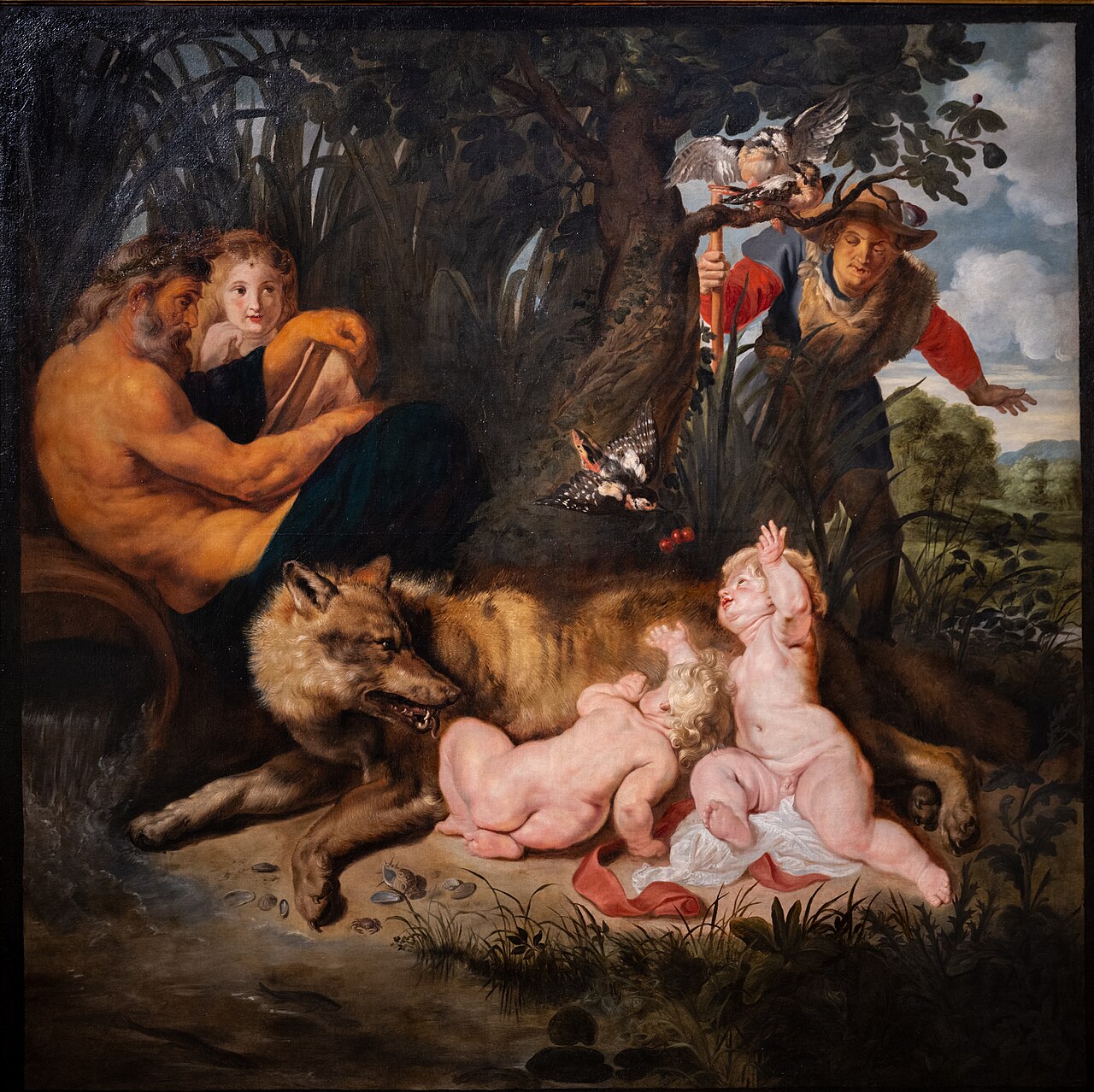
- Inline image: Peter Paul Rubens; photograph by Wilfredor — Peter Paul Rubens, Romulus and Remus, circa 1616. This later painting interprets the founding myth. Photograph by Wilfredor, CC0; resized for display.