
Sparta and the cost of tradition
Sparta’s reputation depended on the claim that its citizens lived by an exceptional inherited order. Discipline, shared meals, and obedience appeared to explain its military strength. Yet the same society increasingly struggled to maintain its full citizen body. Tradition helped justify a system whose economic foundations were becoming less secure. That is a stronger explanation of its decline than the simple accusation that Spartans refused every new idea.[1][2][3]
“Downfall” needs a boundary. Sparta did not disappear after one battle. This article concerns the collapse of its predominance in fourth-century BCE Greece, especially the defeat at Leuctra in 371 and the loss of Messenia afterward. Later Spartans continued to argue about reform, citizenship, and what their ancestral institutions really required.[4][5][6]
The ancestral constitution was also a story
Xenophon’s Constitution of the Lacedaemonians attributes Sparta’s success to the lawgiver Lycurgus. Its account makes obedience a public virtue and presents a deliberately distinctive way of life. But Xenophon also complains that contemporary Spartans sought wealth and foreign commands rather than following the old rules. His text therefore contains both admiration for the ideal and anxiety about the distance between ideal and practice.[1]
This is evidence for the authority of tradition, not proof that the institutions had remained unchanged for centuries. Plutarch, writing much later, opens his Life of Lycurgus by acknowledging disagreements about the lawgiver. Historians cannot simply treat an ancestral reformer’s biography as a contemporary administrative record. Claims about the past were themselves part of how Sparta’s social order was explained and defended.[7]
Someone had to produce the shared meal
The celebrated citizen lifestyle rested on an unequal distribution of work and freedom. Helots were a subordinated, unfree population whose agricultural labor supported the Spartiate citizen elite. Conquered Messenia was crucial to this arrangement. From the citizen’s perspective, the system made time for military and communal obligations; from the laborer’s perspective, it imposed the economic cost of sustaining someone else’s independence.[3][5]
The common mess, or syssition, joined that material arrangement to civic identity. Aristotle explains that members had to provide contributions and could lose citizenship rights when unable to pay. A practice presented as communal could therefore exclude men whose households lacked sufficient resources. Sharing a table did not mean sharing wealth equally, and the inability to contribute was more than a private financial problem.[2]
How property could shrink the citizen body
Aristotle describes land accumulating in comparatively few hands. He points to rules that discouraged selling an inherited estate while permitting gifts and bequests. The outward protection of ancestral property did not prevent unequal holdings. His criticism connects impoverishment with a shortage of citizens, rather than treating military manpower as a question of birth rates alone.[2]
Aristotle is not a neutral observer: his attack also blames Spartan women’s property and supposed behavior. That misogynistic framing should not be recycled as an explanation that women destroyed Sparta. The more defensible institutional question is how inheritance, accumulated holdings, and the cost of civic participation distributed power. His description of the contribution rule remains useful without accepting his prejudices.[2][3]
George Tridimas’s political-economy study offers one interpretation of the obstacle to reform: institutions could remain attractive to their beneficiaries even while weakening the state. Wealthier surviving citizens did not necessarily lose when poorer men dropped out of the privileged group. In this reading, stability protected advantages that were unevenly distributed. The argument concerns incentives and political power, not an inability of Spartans to recognize change.[3]
| Spartan ideal | Economic arrangement | Source of vulnerability |
|---|---|---|
| A disciplined citizen community | Citizenship included material obligations to a common mess. | Household impoverishment could become civic exclusion. |
| Continuity of ancestral property | Gifts and inheritance could concentrate land. | A shared public lifestyle coexisted with unequal resources. |
| Military independence | The citizen elite depended on agricultural labor under domination. | Losing Messenia damaged the basis of that independence. |
| Fidelity to Lycurgus | The ancestral past supplied political legitimacy. | Reformers and defenders of existing arrangements could contest the same tradition. |
Leuctra exposed the weakness; Messenia deepened it
At Leuctra in 371 BCE, the Thebans defeated Sparta’s army. Xenophon describes superior Theban cavalry and a deeply massed infantry formation confronting the Spartan king’s sector. He reports that roughly 400 of the 700 Spartiates present died. Those are his reported figures, not a modern census; they concern full Spartan citizens at the battle, not every person living under Spartan rule.[4]
The defeat therefore has to be understood at two levels. Battlefield decisions and Theban effectiveness explain how the army lost. The narrowness of the privileged citizen body helps explain why the losses were difficult to absorb. Tradition alone did not win the battle for Thebes. It mattered through institutions that had made Sparta less resilient.[3][4]
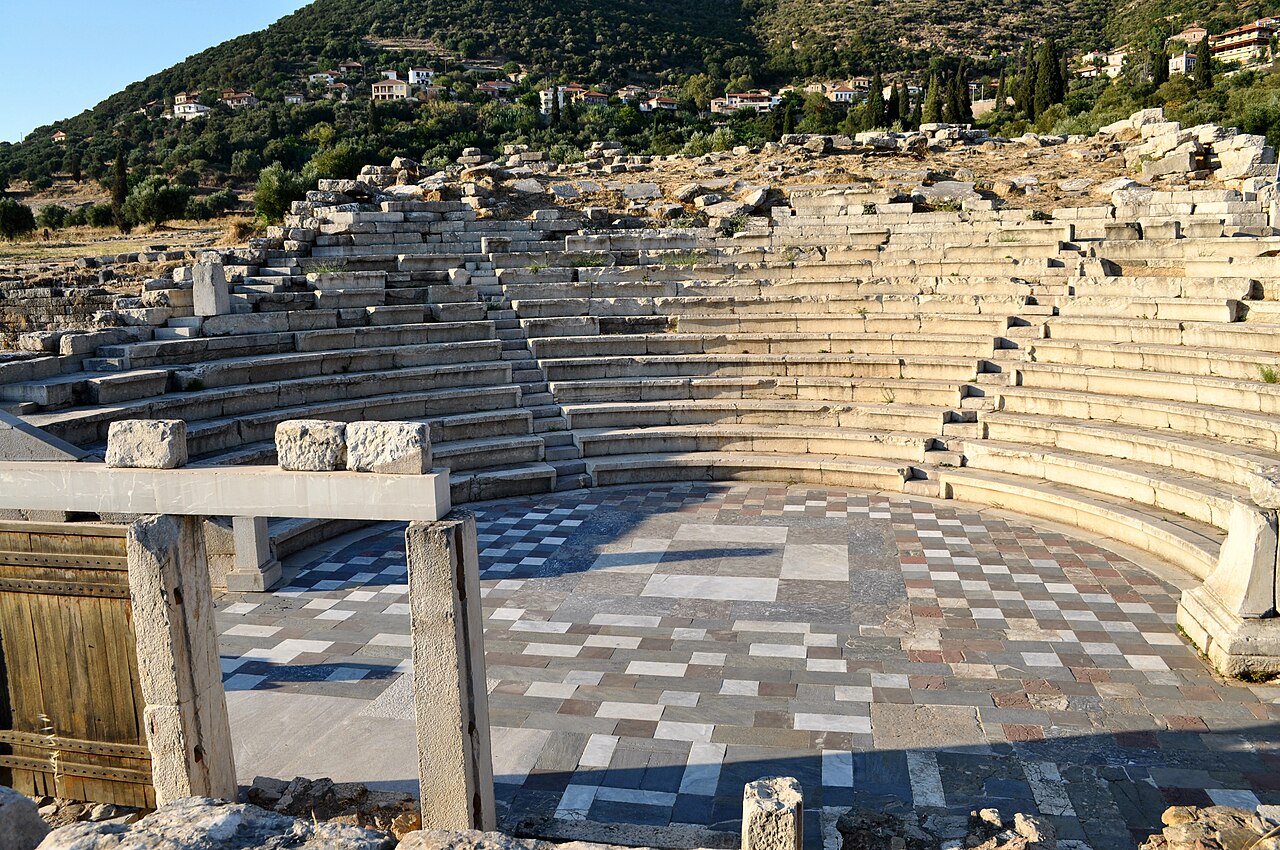
The following Theban intervention severed another foundation of Spartan power. Messene was founded in 369 BCE as the capital of a free Messenian state. The Greek submission to UNESCO’s Tentative List describes this as an end to centuries of Spartan domination. For Sparta, it was a territorial and economic loss; for the Messenians, the same event was liberation. Calling it merely Sparta’s tragedy would erase that difference.[5]

Tradition could also authorize reform
The later career of King Agis IV prevents an easy equation between tradition and resistance to change. Plutarch describes Agis proposing debt relief, land redistribution, and an enlarged citizen body in the third century BCE. He presented reform through an appeal to an older Spartan order. In that account, invoking Lycurgus could challenge the wealthy as well as protect existing institutions.[6]
The most useful conclusion is consequently narrower than “tradition caused Sparta’s downfall.” An admired civic culture helped legitimize an economy of unequal holdings and coerced labor. Exclusion weakened the citizen base, defeat exposed its limits, and Messenian independence removed resources. Appeals to the past mattered because they shaped which arrangements people defended—and which reforms could be presented as legitimate.[2][3][5][6]
Sources & citations
- Xenophon, Constitution of the Lacedaemonians, especially chapters 7–8 and 14 — Ancient account hosted by University of Arkansas historian Charles E. Muntz. Used as evidence of ideals and criticism, not a transparent description of all Spartan life.
- Aristotle, Politics, Book II, selections on Sparta — Primary ancient critique of landholding, mess contributions, and citizenship. Its hostile claims about women are explicitly distinguished from the institutional evidence.
- George Tridimas, “A political economy perspective of the constitution of ancient Sparta” (2025) — Constitutional Political Economy 36, 44–67; published online in 2024. A modern institutional interpretation, not the sole accepted explanation of Spartan decline.
- Xenophon, Hellenica, account of Leuctra (371 BCE) — Primary narrative in translation. The casualty totals are explicitly attributed to Xenophon and are not generalized to the entire population.
- Permanent Delegation of Greece to UNESCO, “Archaeological site of Ancient Messene” — Greece’s Tentative List submission, 2014; used for the 369 BCE foundation and Messenian independence, not a claim that the site is inscribed on the World Heritage List.
- Plutarch, Life of Agis, especially chapters 5–8 — Later ancient biography describing reform as a return to ancestral principles. Distinguishes third-century reforms from the fourth-century loss of hegemony.
- Plutarch, Life of Lycurgus, chapter 1 — Plutarch acknowledges conflicting traditions about Lycurgus; the biography is not used as contemporary proof of an original equal land distribution.
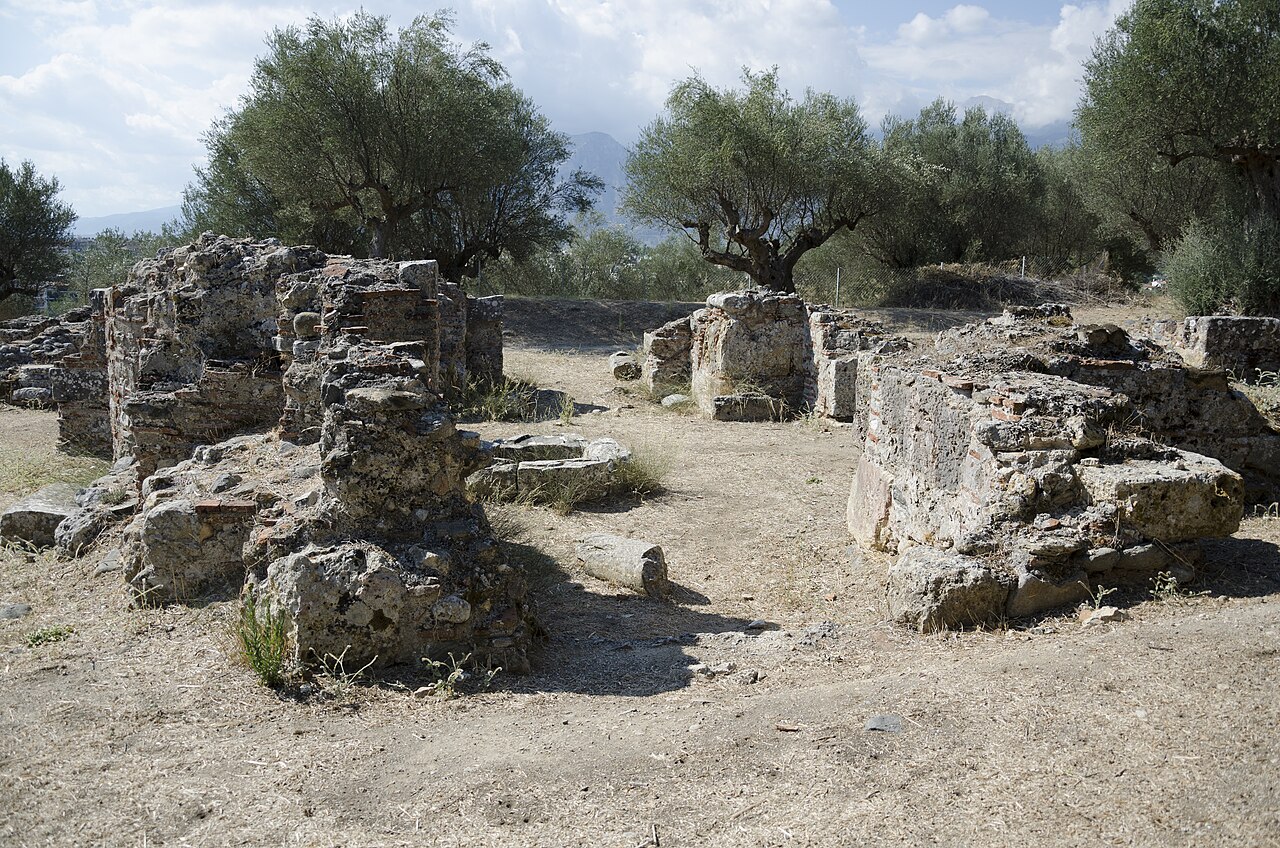
- Featured image: Peulle — Ruins at the archaeological site of ancient Sparta, photographed in 2017. Photograph by Peulle, via Wikimedia Commons, CC BY-SA 4.0. Cropped to fit the featured-image frame.
- Inline image: Dimap1981 — Remains at Ancient Messene, photographed in 2010 by Dimap1981. CC BY-SA 4.0, via Wikimedia Commons; resized for display.